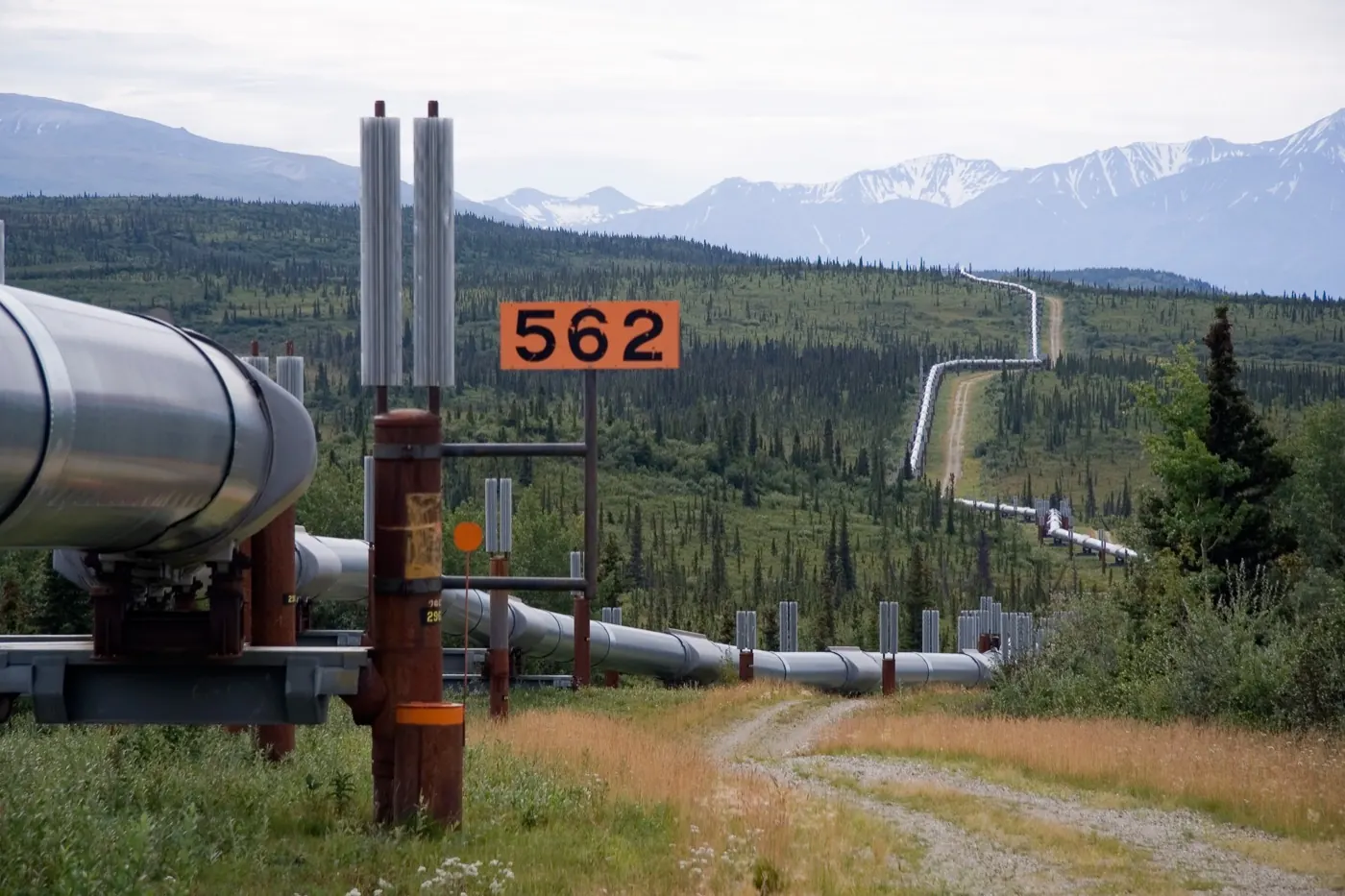
The operations that work well here built their systems around those constraints decades ago. The opportunity now is the gap between those legacy systems and the manual work that has accumulated on top of them. Most of the AI value in oil and gas is sitting in that gap.
Where AI earns its keep in oil and gas operations
Maintenance scheduling and dispatch
Field maintenance in Alaska is fundamentally a logistics problem. A bearing that needs replacing at a remote well pad is a flight, a truck, a crew shift, and a weather window. AI dispatch tooling that accounts for travel, weather, parts availability, and crew certification turns a five-step manual planning exercise into a one-click confirmation.
Compliance and reporting
The reporting cadence on the Slope is relentless — daily, weekly, monthly across state DEC, federal BLM, EPA, AOGCC, plus operator-specific reporting back to the parent. The format varies by recipient. The data does not. AI document generation against a unified data layer eliminates the duplicate work, and gives compliance teams something cleaner to audit.
Contractor coordination
Major operators run hundreds of contractors at any given time. Onboarding, training records, safety certifications, insurance currency, badging, work-package handoff. Manual handling of this in a regulated environment is a leading cause of stand-downs. Automation reduces both the friction and the risk.
Incident and near-miss reporting
The closer reporting friction is to zero, the more incidents and near-misses you actually capture — which is how safety culture compounds. We build voice-to-form and mobile capture tools that turn a two-page narrative report into 30 seconds on a phone, with the data structured behind the scenes.
What Alaska oil and gas does differently
- Remote rotation workforce. Two-on-two-off, four-on-four-off, charters in and out. Your "team" is partially on shift at any given moment. Systems have to handle handoff between rotations as a primary case, not an edge case.
- Federal land overlays. NPR-A, ANWR, federal lease blocks. The permitting and reporting differs by parcel, and the data lives in different agency systems.
- Production decline + cost discipline. Both basins are mature. The economic margin for new operational waste is small. AI investments here have to show clear hour-recovery or risk reduction; speculative bets do not survive AFE review.
Where we will not pretend to help
Reservoir modeling, seismic interpretation, drilling optimization — those are specialist domains with specialist vendors. We do not compete there. We work on the operational and back-office layers where most service hours actually get spent.
Questions we get
Do you work with operators directly, or just service contractors?
Both. Most of our oil and gas work is with service contractors and field-services firms — they have more workflow pain and faster decision cycles than majors. We also work with operator support functions when the use case is sharp.
How do you handle data classification and ITAR / export-control concerns?
Carefully. We design data handling to your existing classification scheme from day one. Anything regulated stays inside your tenancy; nothing leaves your environment by default. We will not pipe sensitive data through a consumer model API.
Can you do predictive maintenance work?
When the sensor data is there and the failure mode is well-characterized, yes. When it is not, we will tell you up front. Predictive maintenance is a frequent overpromise in our industry; we will not sell it where the data does not support it.
See related industry work: logistics & freight, Native corporations. Or read about workflow automation generally.